
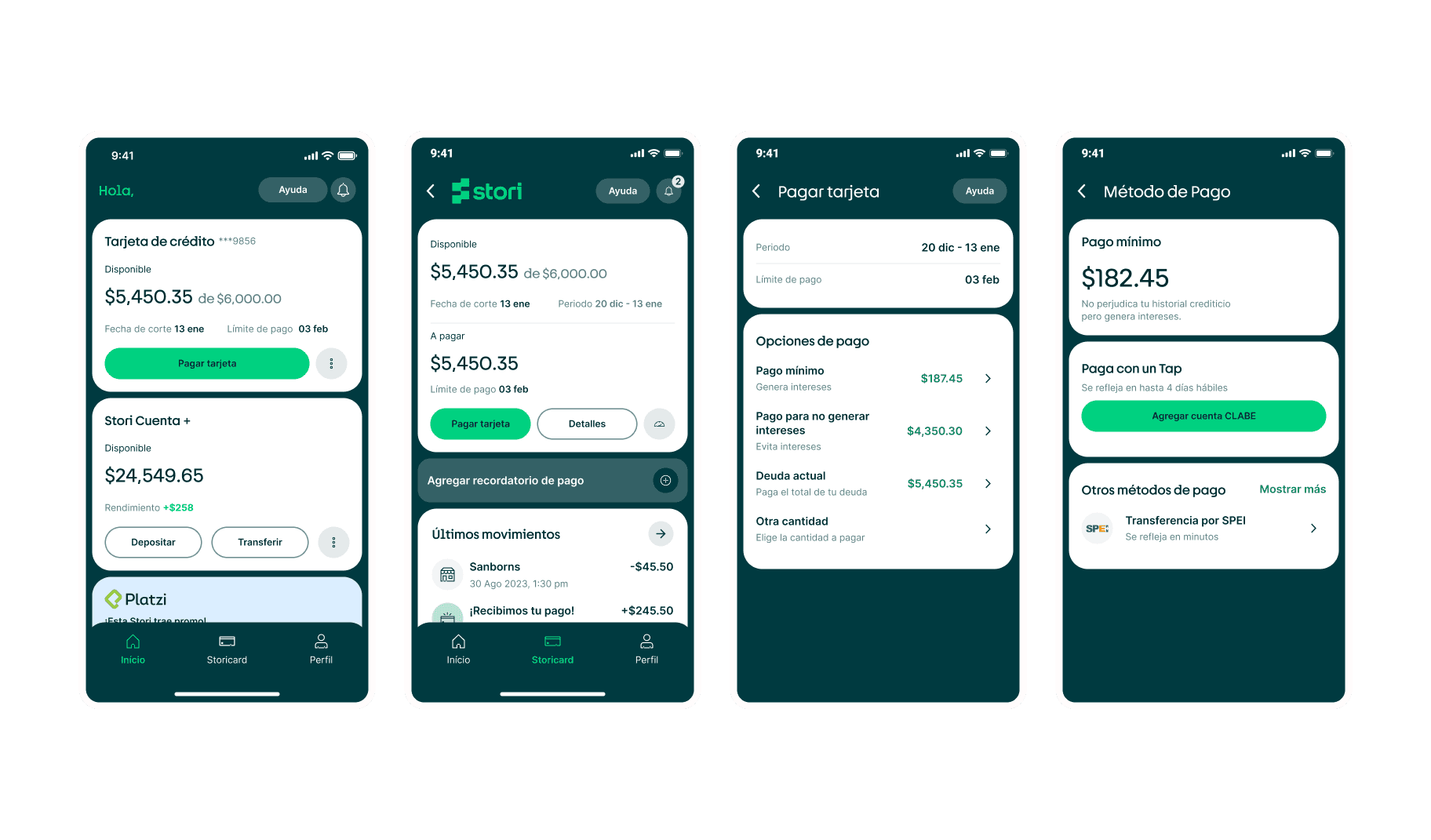
Increase Pay on Time
up to 85%
Timeline
January — 2024
PLATFORM
Native App
MY ROLE
Product Designer
🚀 About Stori
Stori offers access to a credit card to those who have been historically ignored by traditional banks, helping them start or repair their credit history though a fully digital experience. The app focuses on financial in inclusion and education, teaching users in practice how to manage their personal finances and build a healthy credit score through reliable, on‑time payments.
From marketing channels like social media and the blog to in‑app experiences, Stori aims to turn abstract financial concepts into simple, actionable guidance that fits everyday life. This project focused on bringing that education and clarity directly into the core payment experience.
My Role
As Product Designer for the Payment Experience, the responsibility
was to lead the end‑to‑end design of how and when users pay their card,
collaborating closely with: Louis, Product Lead, Carlos Martínez, Tech Lead
Problem and Goals
Ideation
As we begin this ideation process, we capture our ideas about the new features
that we will incorporate into the Stori app. First of all, we prioritize
Business goal / OKR
Increase POT rate to >85, reducing delinquency and support cost.
How might we increase the time to value of decisions making payment option?
“
Defining the problem
Product Goals
BUSINESS GOALS
Reduce payment related confusion and make the process more self-service,
lowering contact rate.
Simplify payment dates, amounts and statuses so users
can quickly understand what to do next.
Provide coherent payment states and messages across the app
(one source of truth), so the experience feels consistent and reliable.
Increase the average number of on‑time payments, positioning the card
as a tool to grow credit, not just to spend.
USER GOALS
Know clearly when to pay and how much to pay to avoid interest and
improve their credit score.
Reduce the effort and stress of paying, with simple steps,
clear communication and the option to automate payments when possible.
Receive content and reminders that feel relevant to their financial context,
not generic advice.
OPPORTUNITY #2
A significant portion of users had trouble accessing the app itself, often related to KYC and login friction.
About 40% of open tickets were tied to difficulties accessing the app.
Even if the payment experience is clear, users cannot pay on time if they cannot get into the app; access and payment must be thought of as one continuous journey, not two separate problems.
IMPACT
Frustrating, manual payments
Payments were a manual, repetitive process that users had to reconstruct month after month.
Manual process that users have to repeat every time month: Simplify the experience, Impact on Payment Customer Effort by direct debit
IMPACT
A product without social proof is just an app.
OPPORTUNITY #3
Research and Key Insights
To understand why people were not paying on time, product data (queries and Quicksight boards) and internal surveys with the collections team were analyzed, and feedback from app reviews and social channels was incorporated.
OPPORTUNITY #1
Confusion and self‑service
Users often did not fully understand how their credit line and billing cycle worked, and existing explanations were confusing or hard to find.
If users do not understand the relationship between cut‑off date, payment date and reflected payment, paying on time feels risky, and they prefer to ask for help instead of trusting the app.
IMPACT
More than half really don't know much about the credit line and payment cycles actually work.
44% of ‘balance inquiry’ and ‘payments’ questions were variations of " How long does it take for my payment to show up"?
30%
15%
10%
10%
20%
15%
How could we help you pay the payment so as not to generate interest on your Stori?
30% of Users suggested that we could help them pay off their total debt by offering deferred or installment payment plans, which would allow them to better manage their cash flow.
20% of users indicated that a reduction in the interest rate could make it easier for them to pay off the total debt.
15% of the users mentioned the option of having more time to complete the payment.
10% suggested the possibility of increasing your credit limit.
Finally, 10% of users mentioned that payment reminders could help them better manage their payment obligations.
Important payment period dates
Visualization of the user journey, clarification, and education of the credit operation.
Focused on displaying the monthly cutoff date.
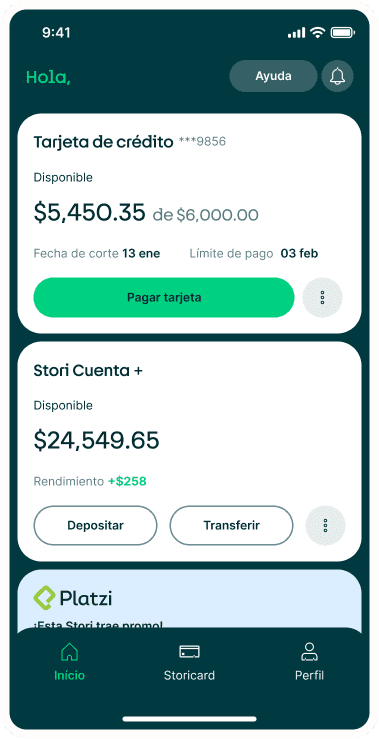
Payment information
Data prioritization and payment status
Eliminates status quo bias
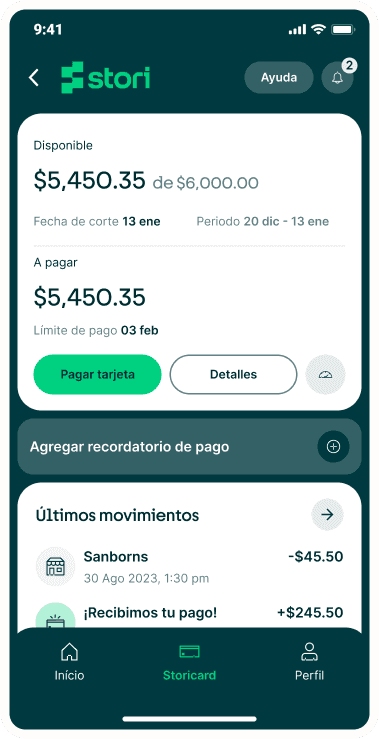
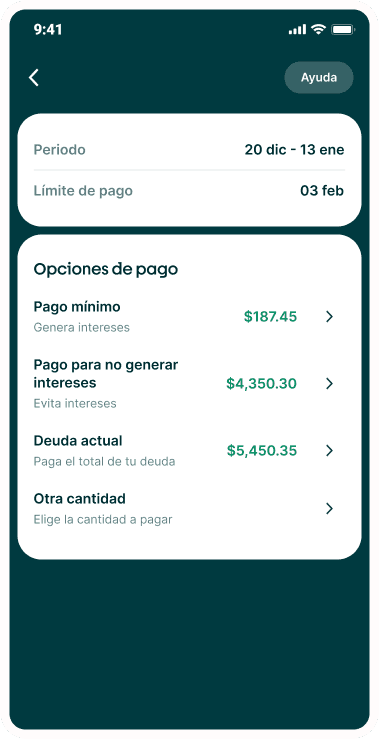
Reaffirms and visualizes the purchasing period
Choose a payment option with a brief payment description
Registration of CLABE account to make direct debit collection
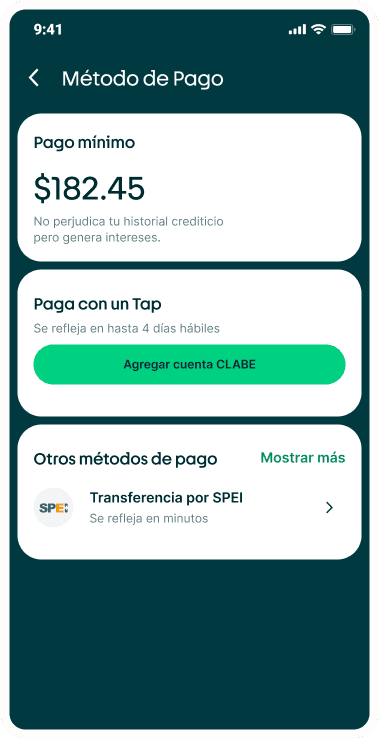
We went through iterations by analyzing data
Do you know the impact of paying less than the amount to avoid
generating interest?
How do you know when and how much to pay?
The three main actions that users perform before making a payment are:
1. About 84% of users indicated that they check the app to find out how much and when they have to pay.
2. About 12% of users rely on notifications from the app to remind them when they need to make a payment.
3. 4% of users mentioned that they keep their own record of when and how much they have to pay.
What I learned
Designing for on‑time payments at Stori reinforced
several key lessons about fintech, behavior,
and collaboration.
Rather than trying to fix everything at once, it worked better to target specific
parts of the payment journey—dates, amounts, statuses—and validate
their impact, building toward a clearer future vision.
Behavior change needs both clarity and motivations
Reducing friction is not enough; people also need reasons to care.
Connecting on‑time payments to credit growth and opportunities
made the experience more meaningful.
Early, honest communication is critical
In a fast‑moving fintech environment, alignment between
product, design, engineering and collections is essential
to “move the needle” without confusing users.
Access and payment form one journey
If users cannot access the app reliably, they cannot pay on time.
Payment design must account for KYC and access constraints,
not assume a perfect entry point.
Iterate in small, focused steps